
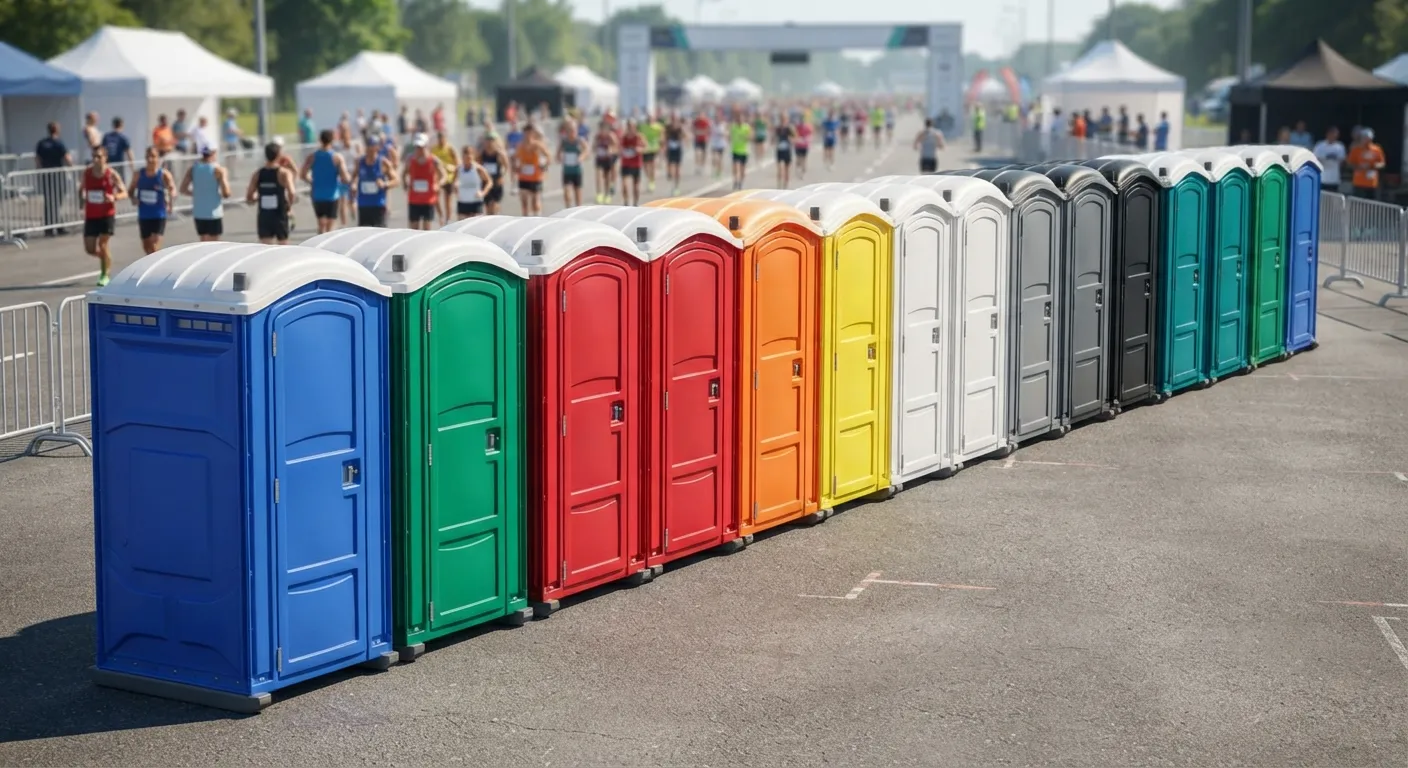
How many restrooms does a race route need?
Start line volume drives the count more than finish line volume, because runners queue before the gun and trickle through after. Race directors in Sunrise typically plan for one standard porta potty rental per 100 to 150 registered runners at the corral, with a smaller cluster at each aid station along the course. OSHA 1926.51(c) sets construction ratios of one toilet per 20 workers, but races are spectator events, not job sites, so most organizers work off runner headcount and expected wait time instead. Courses that loop back near the start, like routes staged from a central park in Sunrise, can share a restroom bank between the start and mile markers that cross the same road. Point to point routes need standalone clusters at each aid station because nothing gets shared. Add a unit or two at the finish chute for medical tent overflow. For events over 500 runners, a restroom trailer rental at the finish line handles the crowd better than a long row of standard units, especially if the event includes a post race festival. Every cluster placed anywhere near a curb or right of way needs placement confirmed with the city, since Sunrise right of way rules are not something to guess at. Check the porta potty placement guide before you lock in aid station spots, and review porta potty permit requirements early, because race permits and sanitation placement often get reviewed together by the same city office.
What does race restroom rental cost in Sunrise?
A single standard unit runs a flat event-day rate, but most race organizers rent by the event package rather than per-unit day rate once the course needs ten or more toilets. Below is what one order typically includes.
| unit | duration | typical cost | notes |
|---|---|---|---|
| standard | event | $400 | per unit, multi-day race weekend |
| ada | week | $185 | one accessible unit per cluster |
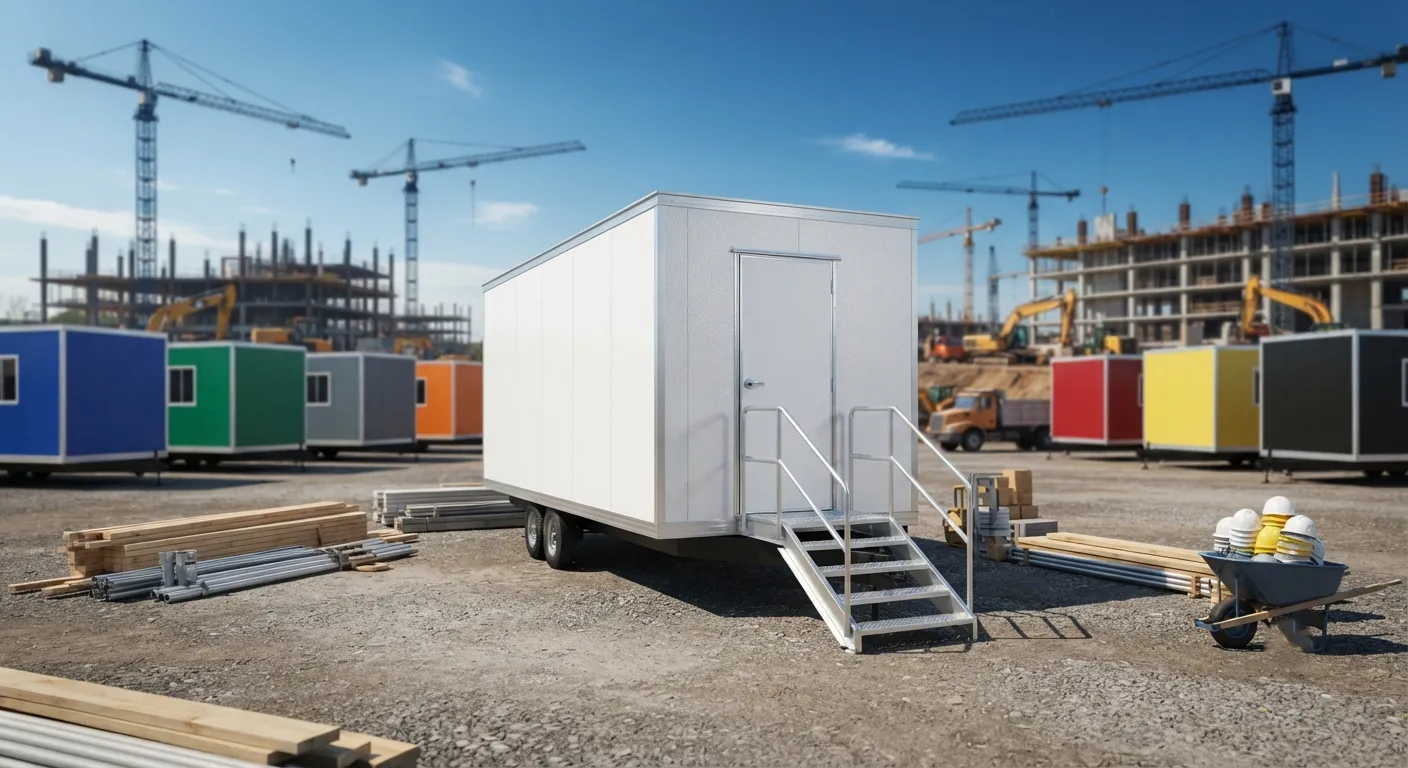
| trailer | event | $3,500 | finish line, races over 500 runners |
| delivery_fee | day | $150 | applies per drop location on course |
Course sanitation almost always means multiple delivery points, not one truck stop. Every aid station is a separate delivery, so the delivery fee line item multiplies fast on a spread-out course. Compare that against a porta potty rental per day quote if your event is a single-location fun run rather than a full course. Larger races sometimes add a deluxe flushable porta potty near the VIP or sponsor tent, and post-race festivals with food vendors often need a handwashing station rental near concessions, since hand sanitizer alone does not meet 29 CFR 1910.141(d)(2) for washing facilities. If your finish line runs generators or timing equipment, that is a separate conversation from restrooms, but worth mentioning here: crews setting up a temporary power pole on race morning should brace it against wind load and foot traffic before the corral opens: how to brace a temporary power pole comes down to staking guy wires at three points and setting a stable base plate, the same way a temporary power pole gets staked and guyed on any outdoor job site, not left free-standing near a curb where runners or volunteers can clip it.
Can we use one company for restrooms, fencing and power?
Yes, and it saves a coordination headache on race morning when every vendor is trying to hit the same load-in window. Sunrise Porta Pros delivers restrooms, temporary fence rental for corral lanes, and light tower rental for early start times through one delivery schedule instead of three. A marathon starting before sunrise needs lighting at the corral and staging area, and OSHA 1926.56(a) sets minimum illumination intensities that are a reasonable benchmark for construction-adjacent staging even though the race itself isn't a job site. Chain link panels double as crowd control barrier rental along the finish chute, keeping spectators off the runway without a second vendor truck. Booking restrooms, fencing and lighting together also means one driver plans the 60 feet of straight clearance a delivery truck needs behind each drop point, instead of three separate trucks fighting for the same curb space. If your race route runs near Tamarac, 3.6 miles north of Sunrise, or draws volunteers from Lauderdale Lakes, 4.6 miles east, ask about multi-city drop scheduling so aid stations get serviced in one loop rather than three separate runs. See construction site services for how the same delivery logic applies to job sites, and check event restroom rental for non-race gatherings like festivals or fairs that need similar planning.
How far in advance should we book race restrooms?
Book as soon as the course map is final, ideally 60 to 90 days out for events over 1,000 runners. Aid station counts, corral sizing and finish line trailer needs all depend on final registration numbers, and popular event weekends fill delivery slots fast. Request a quote once headcount estimates firm up.
Do we need an accessible unit at every aid station?
At minimum, one accessible unit per cluster, per ADA Standards section 213.2, whenever units are grouped. A cluster of six standard toilets at a start corral needs at least one ADA unit within that group. Isolated single units at remote aid stations should also include one where feasible.
What is the difference between a standard unit and a restroom trailer for a finish line?
A standard unit runs 44 by 48 inches on the ground and holds one person. A trailer offers multiple stalls, sinks and better flow for crowds over 500 people. Trailers cost more but cut queue time dramatically at a busy finish line.
Who handles permits for race day sanitation placement?
That depends on whether units sit in a public right of way, a park, or private lot, and Sunrise placement rules need confirming with the city rather than assumed. Race organizers usually coordinate this alongside their event permit. Start that conversation early.
Can restrooms be moved along the course after the race starts?
No, once a race begins, units stay put for safety and logistics. Plan aid station and corral placement final before gun time. Adjustments happen during setup, not mid-event, so confirm your course map before delivery day.
Next step
Get a delivery date
Tell us the address, the dates and the headcount. We size the order and confirm the route.